Classical retail theory understands physical retail as a reactive distribution instance. It bridges gaps between production and consumption — but in this understanding, it does not generate demand of its own.
Space & Time
Bridges the gap in location and timing between production and consumption
Quantity & Assortment
Breaks manufacturer quantities down into customer quantities, bundles them into relevant assortments
Quality & Advice
Pre-selects and delivers purchase information
Credit & Service
Assumes financing and sales risk, provides supplementary services
Today
The new reality
This classical picture now meets a changed industry landscape.
Direct access, new distance.
Brands reach their customers directly today — through their own stores, D2C, social media. That brings control over messaging, pricing and data. But the digital channel delivers little product experience. Nobody feels online how a bike rides, how a jersey feels.
Own stores, high costs.
Some brands have opened flagship stores to bring the experience back. That works — but only for a few, only in a few cities, and at considerable fixed cost. And it requires new expertise.
More visibility, less impact.
Digital attention is getting more expensive, the impact per contact is declining. The question is no longer whether you're seen — but whether you're remembered.
Private labels as a power shift.
Retail itself becomes a manufacturer: private labels intensify the competition for shelf space and visibility. Brand partners no longer compete only with verticalized brands in their own sales channel, but increasingly with the retailer's own assortment.
Showrooming through price transparency.
Price comparison via smartphone takes seconds, right there in the store. Customers increasingly use the physical location only to experience and get advice — then buy elsewhere at a lower price. Retail carries the cost of the purchase decision without earning on the actual sale.
The place remains.
Physical retail has largely lost its role as a mere point of procurement — that's no loss. There are excellent alternatives. What remains is more valuable: the physical place where people experience products, compare them, get advice, and have a good time.
In the classical model, retail matches supply to demand that already exists — but does not generate demand that wouldn't exist without it. The classical trade margin is calculated for exactly these four function pairs. For nothing beyond that.
Tomorrow
Retail as a stage
We define the physical retail of tomorrow as a medium — as BRICK'N MORTAR MEDIA.
Communication science attributes four functions to media:
Function I
Information
Makes products visible that the audience would otherwise not perceive
Function II
Correlation
Places products in a curated context and advises
Function III
Cultural Transmission
Serves as a gathering point for a community, creates belonging
Function IV
Entertainment
Offers a sensory, physical experience
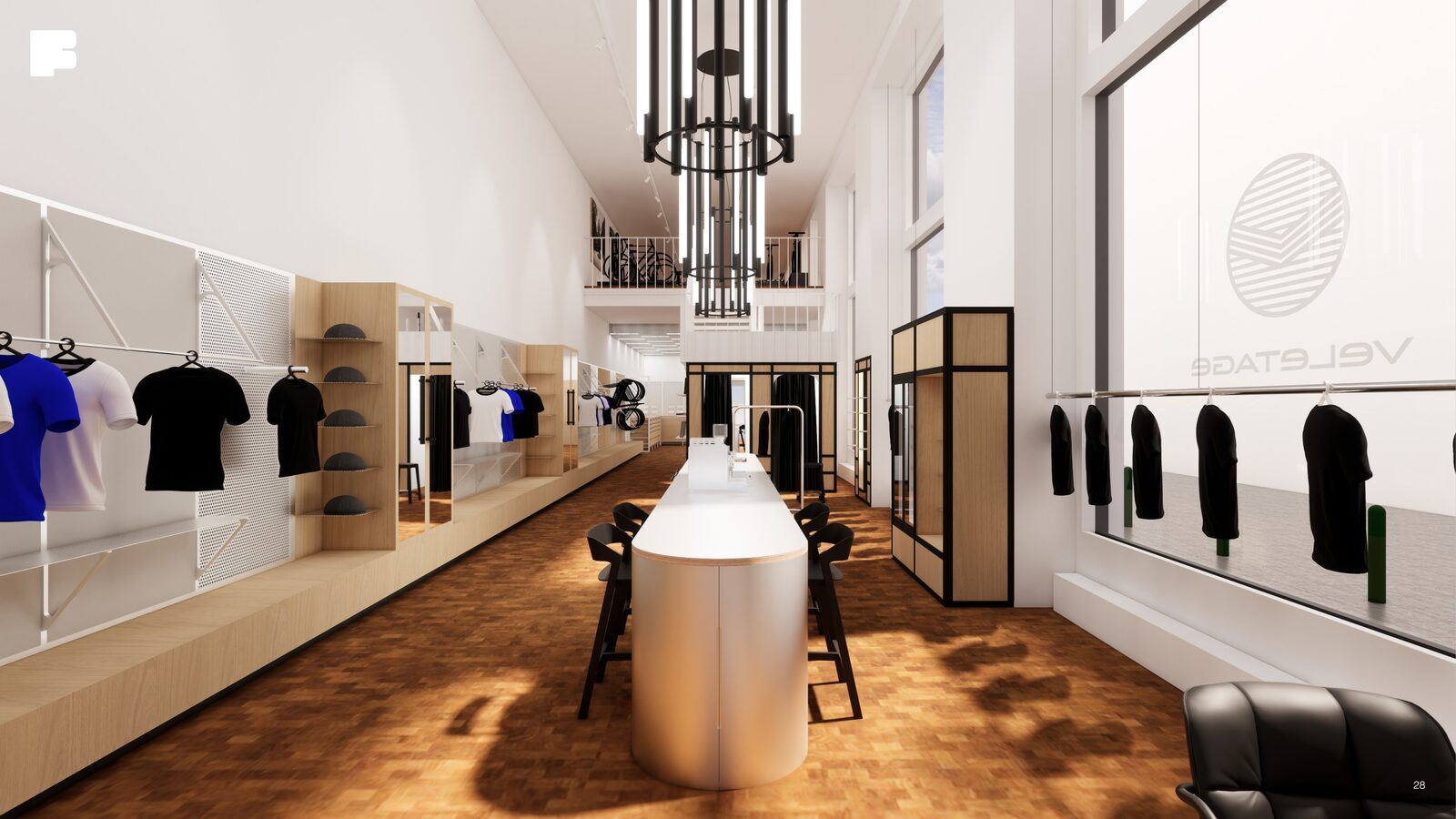
BRICK'N MORTAR MEDIA fulfills all four. And it links the functions of a medium with the functions of retail. It continues to fulfill all classical retail functions — from availability to assortment selection to advice and service. But it goes beyond that: it stages the product, places it in a curated context, creates community and offers a sensory experience. Retail and medium, in one place, in one model.
The Salon
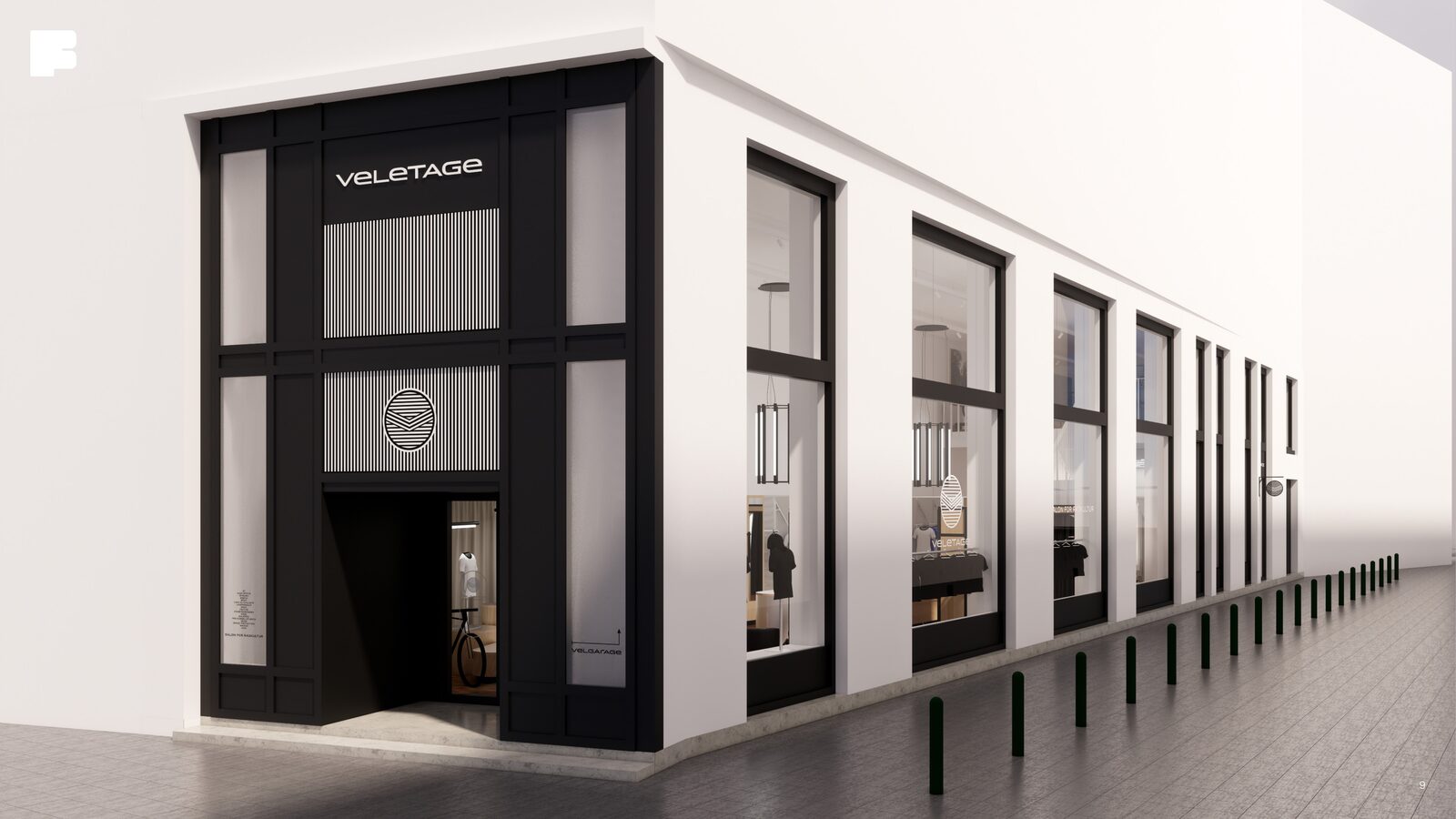
VELETAGE — The Salon as a Medium
VELETAGE is not a bike shop. It's a Salon für Radkultur — a place that stands for a particular attitude towards cycling: quality over quantity, craft over mass production, advice over self-service.
The place.
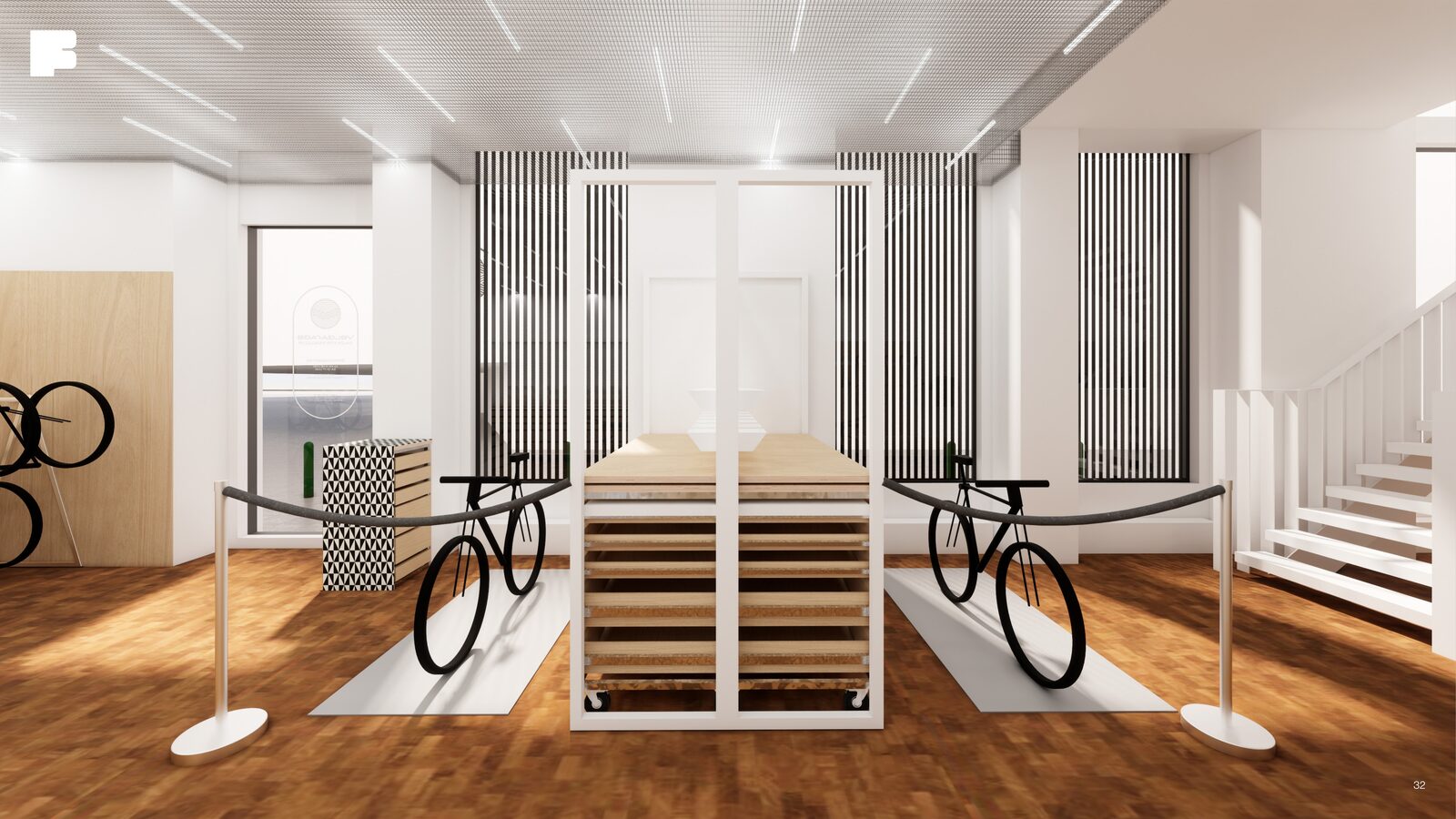
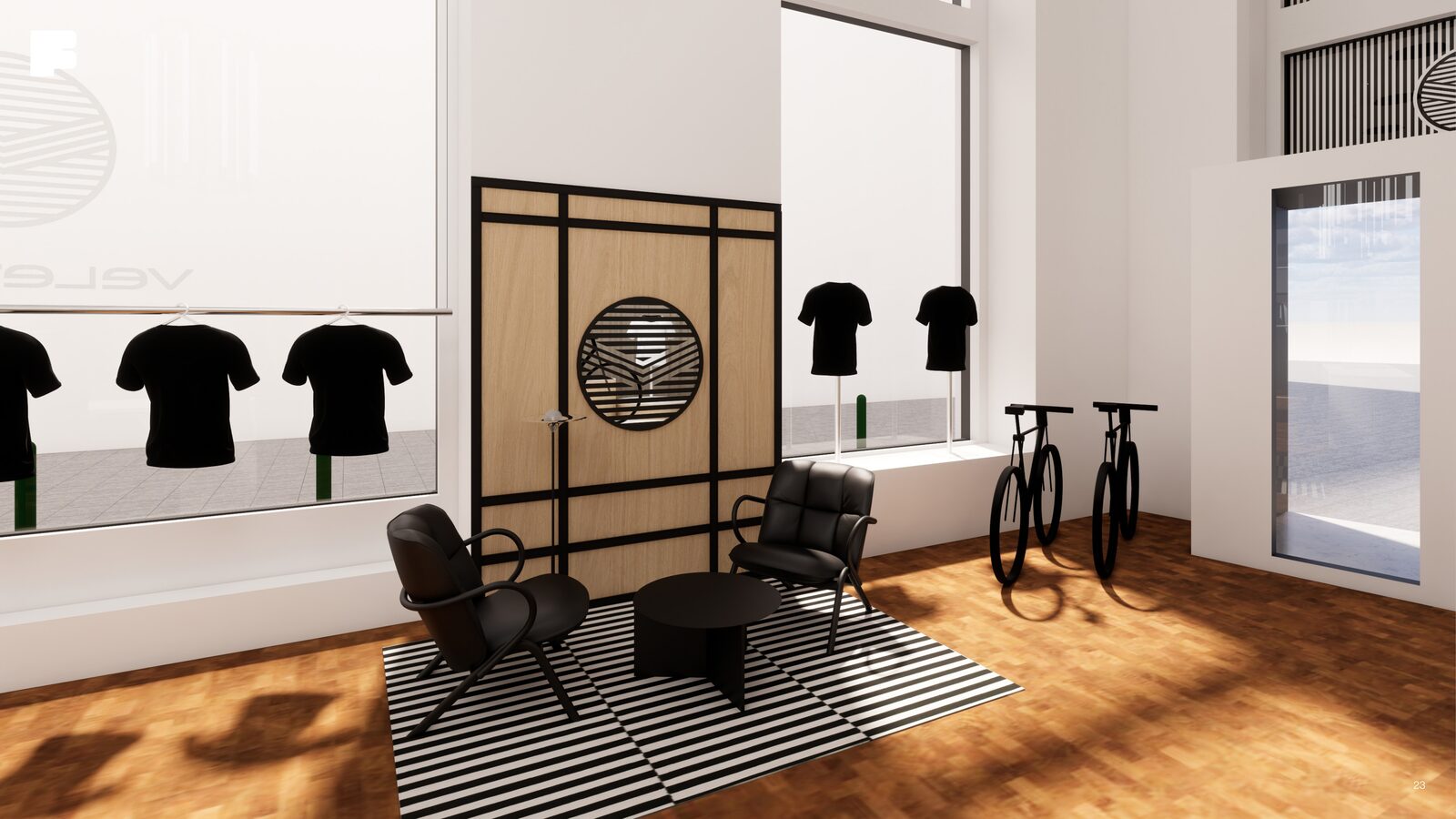
The Nestroyhof, an Art Nouveau palais in the heart of Vienna. Custom-built furniture, chairs and tables by Ton from Moravia, lamps by Intueri Light. Not an interchangeable retail space, but a setting that elevates products by placing them in an aesthetic context. Brands aren't displayed here — they're staged.
The audience.
People who visit VELETAGE come intentionally. The price segment — custom frames by Sarto and Barco, top bikes from ENVE, Factor and 3T, apparel from Pas Normal Studios, Café du Cycliste, 7mesh or fingerscrossed, shoes by Bont and Nimbl, helmets by Sweet and Kask, components from ENVE, Black Inc. and Campagnolo — defines the audience: high purchasing power, style-conscious, brand-affine.
The Bike Fitting.
60–90 minutes of a customer's undivided attention with an expert — measurement, position analysis, saddle pressure mapping. During this time, something emerges that no digital channel can deliver: trust. Anyone who has experienced a bike fitting at VELETAGE trusts the salon's expertise — and the brands present there.
VONHAND.
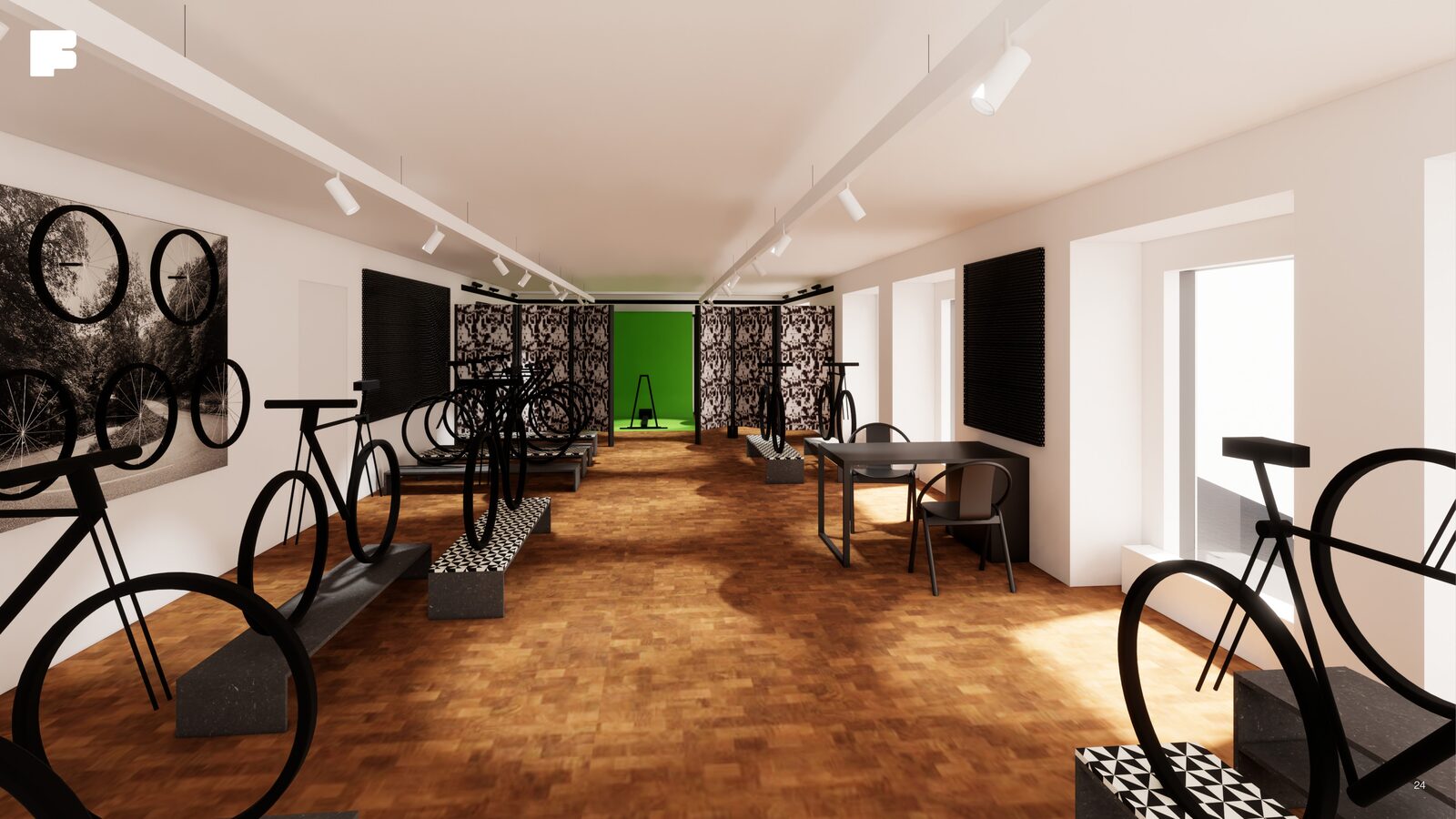
Custom wheel building, individual bike assembly, the One2One custom saddle by fizik, bespoke cycling shoes by Bont — VONHAND is the promise that every detail is tailored to the customer. For brand partners this means: the product isn't just shown, it's staged, placed in the right context.
VELGARAGE.
The Vienna bike workshop. The resemblance to the term Wiener Werkstätte from Viennese Modernism is intentional. As back then, it's not about mass production, but about quality, craft and aesthetics. The ideal place to bring customers into contact with high-quality components and parts.
The community.
Group rides with the VELBAGAGE, the VELO VERTICAL climbing series, seasonal events. VELETAGE is a meeting point for an active community of passionate cyclists. The brand isn't advertised — it becomes part of a lived culture.
The Offer
BRICK'N MORTAR MEDIA at VELETAGE
The principle.
A brand books presence at a curated physical touchpoint — comparable to a media budget for a magazine or a trade show, only permanent, tactile and locally rooted.
What the brand gets.
Your product is staged, not just displayed. Consumers experience it in a setting that fits the brand — through advice, through testing, through an atmosphere no online channel can reproduce. Plus: measurable data on reach, engagement and sell-through.
What it is not.
Not a shop-in-shop, not a concession model, not shelf rental. The location remains an independently curated place. The brand doesn't buy a spot — it buys access to an audience that is already there, already interested, and ready to engage with the product. That guarantees authenticity.
Let's talk.
Not about purchasing conditions, not about shelf space — but about how your product can be experienced in one of the most compelling spaces in European cycling culture.